- Home
- YOUR FUTURE
- Futurist Keynotes
- FUTURE EVENTS
- How Patrick Dixon will transform your event as a Futurist speaker
- How world-class Conference Speakers always change lives
- Keynote Speaker: 20 tests before booking ANY keynote speaker
- How to Deliver World Class Virtual Events and Keynotes
- 50 reasons for Patrick Dixon to give a Futurist Keynote at your event
- Futurist Keynote Speaker - what is a Futurist? How do they work?
- Keys to Accurate Forecasting - Futurist Keynote Speaker with 25 year track record
- Reserve / protect date for your event / keynote booking today
- Technical setup for Futurist Keynotes / Lectures / Your Event
- Dr Patrick Dixon
- Futurist Books
- Clients
- CONTACT for KEYNOTES

Patrick Dixon - Futurist Keynote Speaker "LIFE WITH AI" - 18th book in shops soon
25 Years Experience in Future Trends Forecasting >400 Global Clients - Every Industry and Region
Future of Artificial intelligence - discussion on AI opportunities and Artificial Intelligence threats. From AI predictions to Artificial Intelligence control of our world. What is the risk of AI destroying our world? Truth about Artificial Intelligence
Future of Sales and Marketing in 2030: physical audience of 800 + 300 virtual at hybrid event. Digital marketing / AI, location marketing. How to create MAGIC in new marketing campaigns. Future of Marketing Keynote Speaker
TRUST is the most important thing you sell. Even more TRUE for every business because of AI. How to BUILD TRUST, win market share, retain contracts, gain customers. Future logistics and supply chain management. Futurist Keynote Speaker
How to make virtual keynotes more real and engaging - how I appeared as an "avatar" on stage when I broke my ankle and could not fly to give opening keynote on innovation in aviation for. ZAL event in Hamburg
"I'm doing a new book" - 60 seconds to make you smile. Most people care about making a difference, achieving great things, in a great team but are not interested in growth targets. Over 270,000 views of full leadership keynote for over 4000 executives
Futurist Keynote Speakers - how Futurist Keynotes transform events, change thinking, enlarge vision, sharpen strategic thinking, identify opportunities and risks. Patrick Dixon is one of the world's best known Futurist Keynote Speaker
Futurist Keynote Speaker: Colonies on Mars, space travel and how digital / Artificial Intelligence / AI will help us live decades longer - comment before keynote for 1400 at Avnet Silica event
Future of Travel and Tourism post COVID. Boom for live experiences beyond AI. What hunger for "experience" means for future aviation, airlines, hotels, restaurants, concerts halls, trends in leisure events, theme parks. Travel Industry Keynote Speaker
Quiet Quitters: 50% US workforce wish they were working elsewhere. How engage Quiet Quitters and transform to highly engaged team members. Why AI / Artificial Intelligence is not answer. How to tackle the Great Resignation. Human Resources Keynote Speaker
The Great Resignation. 50% of US workers are Quiet Quitters. They have left in their hearts, don't believe any longer in your strategy. 40% want to leave in 12 months. Connect with PURPOSE to win Quiet Quitters. Human Resources Keynote Speaker
Future of Human Resources. Virtual working, motivating hybrid teams, management, future of motivation and career development. How to develop high performance teams. HR Keynote Speaker
Speed of change often slower than people expect! I have successfully forecast major trends for global companies for over 25 years. Focus on factors driving long term changes, with agile strategies for inevitable disruptive events. Futurist Keynote Speaker
Agile leadership for Better Risk Management. Inflation spike in 2022-3 - what next? Expect more disruptive events, while megatrends will continue relentlessly to shape longer term future globally in relatively predictable ways. Futurist Keynote Speaker
Crazy customers! Changing customer expectations. Why many decisions are irrational. Amusing stories. Lessons for Leadership, Management and Marketing - Futurist Keynote Speaker VIDEO
Chances of 2 people in 70 having same birthday? Managing Risk in Banking and Financial Services. Why the greatest risks are combinations of very unlikely events, which happen far more often than you expect. Keynote speaker on risk management
Compliance is Dead. How to build trust. Reputation of banks and financial services. Compliance Risks. Why 100% compliance with regulations, ESG requirements etc is often not enough to prevent reputational damage
Life's too short to do things you don't believe in! Why passionate belief in the true value of what you are selling or doing is the number one key to success. Secret of all leadership and marketing - keynote for 1100 people in Vilnius October 2021
Future Manufacturing 5.0. Lessons from personal life for all manufacturers - why most manufacturing lags 10-15 years behind client expectations in their day to day life. Manufacturing 4.0 --> Manufacturing 5.0. Future of Manufacturing Keynote
80% of sales are won or lost in 3 seconds, How to grow your business by giving attention to small things that really matter. Future of Marketing, Futuris Keynote Speaker - Pardavimu formule in Vilnius
Trust is the Most Important Thing You Sell. Managing your Reputational Risk - vital lessons for all leaders. How to build trust with key customers and markets. Futurist Keynote Speaker
Feature Article about Dr. Patrick Dixon, Futurist Keynote Speaker - published in Times Educational Supplement
Dr Patrick Dixon: Futurist Keynote Speaker - Dr Patrick Dixon: Futurist Keynote Speaker
'That's just so last century'
- Feature about Dr Patrick Dixon Published: 08 June 2001 Times Higher Educational Supplement
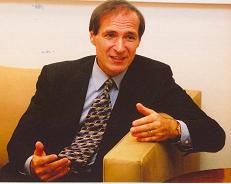 Patrick Dixon lives in a bubble in 2010 and sees tomorrow as history. Actually, when you get there, it is not really a bubble. It is a sickly green, distinctly normal-looking attic at the top of his house in Ealing, but he likes to call it his "cyberbubble" and has ways of making it look that way to the outside world. A flick of a switch and the webcam that continually broadcasts images of Dixon's working environment on the internet replaces the wall behind us with a scene from a camera in his garden. "There," he says, satisfied. "Now we are in the garden."
He wanders off to fetch a cup of tea and the image on the computer screen suddenly looks like something thought up by René Magritte: Dixon is opening an invisible door in the shrubbery and walking down the staircase beyond. Not everything is as you might expect in this cyber world.
Dixon, Chairman of Global Change Ltd, has been styled "Europe's leading futurist". He is a darling of the international business conference circuit, a star turn. Businessmen empty their wallets for a hyperactive verbal assault.
His slogan, emblazoned on his website and repeated at least three times during our interview, is: "Take hold of the future or the future will take hold of you." Punctuated by his favourite phrase: "Oh, that kind of thinking is so last century." And that future, concocted in "this multidimensional cyberbubble, this time capsule if you like, that enables me to travel into the future and try various things out", is "coming towards you at the speed of light and will run you over if you don't do something about it".
A slightly built, dapper man with a firm handshake and a deliberate way of maintaining eye contact, he wields "the future" like a broadsword. For ivory-tower academics working outside practical scientific research, he has an uncompromising prediction. "There is a whole stream of intellectual life that will become marginalised and totally irrelevant over the next decade. It is the stream that spends most of its time with other academics and with those who want to learn from academics," he says. "It is a stream that, with ever greater competition for higher education funds, will find it difficult to connect with an audience outside and therefore by definition will be marginalised because there will be louder voices. In today's world and especially in tomorrow's, if you cannot capture the emotion and imagination of your audience, the idea is worth nothing."
On the other hand, he says: "There will be some people who the academics despise for their shallow thinking who will become the new gurus of the age, who will transform the thinking not only of businesses but of governments and entire societies because they have this extraordinary combination of sharp thinking and communication skills."
Dixon has written a clutch of blockbusters on subjects ranging from the death of parliamentary democracy to the genetic revolution. He is too modest to identify himself with the gurus of the age, but says: "Many of them will be packagers rather than thinkers, and I think I am a packager and a thinker. I am not a pure researcher. I listen and then regurgitate. I am a communicator."
Although Dixon constantly shifts ideas, his fascination with the future is not just empty rhetoric. It has been a lifetime's obsession. Aged ten, he published his first manifesto, on the future of British Rail, predicting trains running on magnetic track, high-speed services competing with planes and a much reduced rail network connecting the big commercial centres. "All this has happened, of course," he notes.
After studying medical sciences at King's College, Cambridge, he arrived as a trainee doctor at Charing Cross Hospital, London, and by the end of his first day had been assigned to run an artificial intelligence research programme trying to get computers to diagnose illness. Within a few years, while continuing his medical career, he had set up a company selling record-keeping software to the National Health Service. By 1987 he was writing his first book, The Truth about Aids, which grabbed national headlines with its criticism of the government's attempts to play down the threat of the disease.
Nine books followed and, as the subjects branched far beyond normal medical concerns, "Patrick Dixon, futurist" was born. "I began to get invitations to talk about what I'd written, but as the books got more diverse, people started saying, 'I guess you can come and do the future in general'," he says.
His conversation shifts with a boyish energy from unsettling ruminations on the possibility of monkeys, which share 97 per cent of their genes with humans, getting human rights and being convicted for murder, to excited exploration of the potential for digital communication to transform working lives. "Imagine you have trading teams in Hong Kong and London. Can we put the two together? Yes we can," he announces. "We can put up a powerful projector washing an entire wall in the office of the team leader in London and put up there a permanent video conference showing the manager's opposite number in his glass box in Hong Kong. They are sharing what looks like a huge desk and they are both life size and they can converse. Are they not really in the same space? How often would you really need to travel if you were sharing that degree of intimacy?"
After an hour or so of wide-eyed prognostication, the temptation to squeeze Dixon into a narrow box - defining him as a career enthusiast and proselytiser for technological change, for example - is strong. But he is not the sort to be confined by stereotype. After a second trip through the shrubbery door, this time to deal with the man seeing to his outdoor swimming pool, Dixon returns with the announcement: "You are trying to package up a nice neat story but in fact you are talking to an eclectic person, someone who has tramped his way through a whole range of different spheres of life, whether it is the boards or senior teams of the largest companies - Microsoft, Hewlett-Packard, IBM, ABN Amro, HSBC - or holding the hand of many a dying person."
He is a devout Christian and spent much of his medical career in hospice work caring for the terminally ill. His book on Aids was a plea for unconditional care and the greater involvement of the Christian church in fighting the disease. He helped create the international charity Aids Care Education and Training, of which he became chief executive. A large slice of his income goes into the charity's work. "That has taken me into many mud huts and slums. My wife and I have just come back from a fact-finding trip in Mumbai, Calcutta, Delhi and Bangkok looking at HIV-related programmes and also women's and children's issues, income-generation projects and slum projects. I have a clear view of the inequalities in the world."
And far from dismissing the video images of the May Day anti-globalisation "riots" playing on one of the cyberbubble's television screens, this adviser to multinationals pauses before reflecting that such discontent is key to understanding our future. He predicts growing protest at forces of globalisation and technological change as people feel they are increasingly out of control.
His mood is darker now: "There is an intellectual and philosophical vacuum. The socialist ideals have gone, the capitalist dream is dead. Both of them have been debunked by the harsh realities of the 20th century. What we are left with is a big question mark about ourselves and our future."
As we leave the cyberbubble through the shrubbery door, Europe's leading futurist says: "All the time we ponder to reflect, science accelerates even further into our uncertainty. At the moment we are dithering. There is moral uncertainty and the future will not stop for moral uncertainty. That kind of thinking is so last century."
This feature appeared in the Times Higher Educational Supplement 8 June 2002
More: How great conference speakers can transform your business - and make or break your career if you are an event organiser. Secrets of all great conference speakers.
| < Prev | Next > |
|---|
Newer news items:
- How can I find a great Futurist keynote speaker? Selecting World's best keynote speakers. Brilliant keynote speakers are rare and remembered by audiences for years. How to avoid mistakes in choosing one of the world's best keynote speakers for your event
- Futurist Keynote Speakers - how to become a world-class keynote speaker who predicts industry trends accurately, challenging and entertaining at the same time. Magazine INTERVIEW
- Passion Will Drive the Future. Team Leadership, Motivational Management - Future of Leadership Keynote Speaker
- Dr Patrick Dixon - Press Photos of Futurist Keynote Speaker
- Technical Setup for Futurist Keynote Speaker Patrick Dixon
- Patrick Dixon Futurist Keynote Speaker - ranked one of top 20 most influential business thinkers, Chairman Global Change Ltd, Author 17 Futurist books. Call now to discuss a Transformational Futurist Keynote for Your Event
- The Daily Life of a Futurist - German TV follows Dr Patrick Dixon, Futurist Keynote Speaker
Older news items:
Thanks for promoting with Facebook LIKE or Tweet. Really interested to read your views. Post below.
Futurist Keynote Speaker
- Impact of AI on Health Care and Pharma – Artificial intelligence keynote outline for Pharma companies and health care organisations. How will AI drive future AI innovation in health and Pharma?
- Life with AI - my latest book, out soon. How to survive and succeed in a super-smart world. 28 chapters on impact of AI in every industry, government, company, personal lives
- Risk of Russia war with NATO. Russia's past is key to it's military future. War and Russian economy, Russian foreign policy and political aspirations, future relationship between Russia, China, EU, NATO and America - geopolitical risks keynote speaker
- Over 2 million have watched my Green Energy Webinar! "Next 20 years will determine future of humanity": predictions for 40 years. Massive scaling green tech. Race for solar, wind v coal, oil, gas. Climate emergency. Futurist Keynote for Enel Green Power
- How AI / Artificial Intelligence will transform every industry and nation - banking, insurance, retail, manufacturing, travel and leisure, health care, marketing and so on - What AI thinks about the future of AI? Threats from AI? Keynote speaker
- The Future of AI keynote speaker. Will AI destroy the world? Truth about AI risks and benefits. (Some of this AI post written by AI ChatGPT - does it matter?). Impact of AI on security, privacy AI, defence AI, government AI - keynote speaker
- Future of Rail in 2030: trends in rail passengers, rail freight, railway innovation. High speed rail, impact on aviation. Rail logistics and supply chain management. AI impact, Zero carbon hydrogen powered railway locomotives - Rail Trends Keynote
- Future of the Auto Industry 2040. Trends impacting the auto industry, car manufacturers, truck factories. Auto industry innovation, autonomous vehicles, flying cars, vehicle ownership, car insurance AI / Artificial Intelligence.Futurist Keynote for Belron
- Future of Aviation: Carbon Zero Planes. New fuels such as hydrogen, smaller short distance battery powered vertical take-off vehicles. Why Sustainable Aviation Fuel is not the answer to global warming. 100s of innovations will transform aviation eg AI
- THE TRUTH ABOUT FUTURE MASS MIGRATION - a people movement with greater force than any military superpower. As I predicted in "Futurewise" (1998-2005), large scale migration is now unstoppable, able to break governments, yet many nations NEED migration
- Why MOST CEO SPEECHES don't create passion or purpose - just create Quiet Quitters. 270,000 views of this PURPOSE speech which no AI can deliver. For typical company in an industry often criticised. Reverse Great Resignation! Leadership Keynote Speaker
- The Future of Life Insurance. Why life insurance will boom globally. New pattens for selling life cover, AI automated underwriting , wearable devices, dynamic premiums. How life expectancy will change.How to build your brand.Life Insurance keynote speaker
- Future of Leadership and Management, Human Resources, Virtual Teams and AI, Hybrid Working, Offices, Quiet Quitting, Careers, Team Motivation, Attracting Talent, Team Engagement - Workplace Keynote Speaker
- Back to Work! Face to Face Meetings Win New Business, Accelerate Innovation, Increase Agility, Implement Change. Future Offices, Future of Work and Workplace in world of AI. Working from Home (WFH). Artificial Intelligence impact on Work
- Future of Retail Globally - why scale matters for lower cost, better products, stronger brand. Future retail growth in every region of the world will follow same patterns. 70% of retail is 8 companies in the UK. Retail Keynote Speaker
- Queen Elizabeth II: the power of example over a lifetime. Lessons for all great leaders. Why her impact on our future world will be so long lasting. Example is the only form of leadership that endures, because it is based on integrity and authenticity
- Future HR trends, workplace, rapid reversal of % time working from home, office occupancy, motivation, recruitment and leadership in an AI world.How to form most effective teams and why most change management strategies fail. HR keynote speaker interview
- Race towards Net Zero Emissions will happen MUCH faster than most predict, accelerated by Russia's war, rapidly falling prices for green energy, innovation, AI and growing global anxieties about climate emergency. Sustainability keynote speaker VIDEO
- 90% of global trade will continue to be container shipping. Cities with large container ports will continue to be hubs for manufacturing, logistics and supply chains for the next 100 years. Future of logistics and supply chain keynote speaker VIDEO
- Small things often have the greatest impact for customers, often cost very little or can even save huge amounts of cost. Logistics and supply chain example - fill empty trucks on return runs (40% of all road freight). Futurist Keynote Speaker VIDEO
- 7 keys to success in logistics and supply chain business. Summary of "Future of Logistics and Supply Chains" Keynote by Patrick Dixon, Futurist Keynote Speaker for Seminarium, Chile - VIDEO
- Q+A: Future of the Food Industry in Latin America, impacted by huge rise in freight costs? When all container freight costs return to normal? Logistics keynote speaker at Seminarium Santiago - VIDEO
- How to Communicate Bad News to Customers. Crisis management - example from logistics and supply chains disruptions. TRUST REALLY MATTERS. Act FAST, be transparent, keep clients updated, work together to find solutions. Logistics keynote speaker
- Q+A: How LITTLE THINGS often create client magic for your VIP customers and clients. Example from supply chains and logistics. Beyond anything that AI / Artificial Intelligence will deliver for your business. Create MAGIC. Futurist Keynote speaker VIDEO
- Q+A Keys to Agile Leadership. Why timing is EVERYTHING in a crisis, backup plans, contingencies, alternatives, dynamic strategy. Lessons on Agility and Agile Leadership from recent disruptive events. Logistics and Risk Management Keynote Speaker
- Q+A What about Future of Logistics in Banking? Dealing with costs of cash handling, and alternative beyond mobile payments. Comment on future of BlockChain, Cryptocurrencies, BitCoin etc - issues of sustainability and efficiency. Banking Keynote Speaker
- Q+A: Future costs of freight? When will container shipping costs fall to normal? Reasons for supply chain crisis. Predictions for future cost of shipping. Future of Logistics and Supply Chains Keynote Speaker
- Q+A: Future Logistics and Supply Chains - outsource or in-house logistics and supply chain teams? Look for growth in Virtual Logistics operations / AI combining agility and scale with control and visibility - Future of Logistics Keynote Speaker VIDEO
- Future energy prices and investment? Future energy markets (oil, gas, coal, nuclear power, wind, solar power etc) will be driven by EMOTION not just "market forces". Examples from recent disruptive energy-related events. Energy trends keynote speaker
- Q+A How to tackle shortage of truck drivers. Why truck driver crisis really matters and how too solve it. Road freight trends. Seminarium: Logistics Supply Chain Keynote Speaker - VIDEO
- 10 seconds to Win the Customer! How to Make Magic for Future Retail Customers in an omnichannel world. And why location is the most important fact you need to know about your customer NOW. Futurist keynote speaker on Future of Marketing
- Russian military strategy in Ukraine under pressure. Longer term impact of military action / war on energy industry, wider economy and other geopolitical risks. Patrick Dixon is a Futurist Keynote Speaker
- Emerging markets will drive global economic growth for next 60 years - where 85% of humanity lives. Global Economy and Macrotrends Keynote Speaker
- Future of the Travel Industry post COVID. Bounce-back as I predicted for Aviation. What next for tourism and business? Why the travel industry will be an engine of global economic growth. Impact of AI. Travel industry keynote speaker at Seminarium event
- COVID, Russia, Energy Crisis, inflation spike, interest rate rises, AI impact on society - how many more shocks can we expect? What next? Interview with Futurist Keynote Speaker and Trends Analyst - Patrick Dixon
- Energy as a national security strategy. Added incentives to go green. Futurist view of Future of the energy industry, oil, gas, coal, solar and wind in a post-COVID world impacted by regional conflict
- Future of Global Trade, Logistics and Supply Chain Management- agility and risk. Scandal of empty containers and boom in regional trade v global. Reducing supply chain risks and disruptions from more global events like the COVID pandemic - keynote speaker
- Future Flying Taxis? Impact of AI on Future of Urban Air Mobility driven by over 250 new companies - electric vertical takeoff and landing (eVTOL). Impact of eVTOL on the future of the aviation industry. Aviation trends Keynote Speaker
- 10 steps to Agile Leadership in a Crisis. Keys to Agile Business Strategy in uncertain times: Turn market chaos into opportunity. Take Hold of Your Future. Leadership keynote speaker
- Managing MAJOR RISKS, economic shocks, pandemics, geopolitical, disruptive tech like AI. Reduce RISKS with agile leadership. Risk management in banking and why many banks are blind to combined impact of different events - risk management keynote speaker
Most Read - Futurist Speaker
- Conference Speakers: How Great Conference Speakers Change Lives. 10 tests BEFORE booking top conference speakers. Keys to world-class events. Secrets of ALL best keynote speakers. Who are the best keynote speakers in the world? 327,000 views of this post
- Futurist Speakers: How keynote by Patrick Dixon will transform your event. Visionary, high impact, high energy, entertaining Futurist keynotes on future trends. Keynotes on AI, tech, health, marketing, manufacturing etc. 315,000 have read this post
- Future of Marketing 2030 - Marketing Videos, key marketing trends and impact of AI on marketing campaigns. Conference Keynote Speaker on Marketing - 232,000 have read this post
- The Future of Outsourcing in world beyond AI - Impact on Jobs - Futurist keynote speaker on opportunities and risks from outsourcing / offshoring. Why many jobs coming home (reshoring - shorter supply chains). AI and new risk, higher agility. 200000 views
- Futurist Keynote Speaker Website - Sorry - something has gone wrong! We will check it out...
- Future of Stem Cell Research - Creating New organs and repairing old ones. Trends in Regenerative Medicine, anti-ageing research, AI. Future pharma, clinical trials, medical research, heath care trends, and biotech innovation.Health care keynote speaker
- Future of the European Union - Enlarged or Broken? What direction for the EU over the next two decades? Geopolitics keynote speaker
- 10 trends that will really DOMINATE our future - all predictable, changing slowly with huge future impact - based on book The Future of Almost Everything by world-renowned Futurist keynote speaker. Over 100,000 views of this post. Discover your future!
- Future of the Automotive Industry (Auto Trends) - e-cars, lorries, trucks and road transport trends, reducing CO2 emissions, e-cars, eVTOL flying vehicles, hydrogen, autonomous AI drivers, auto industry impact from AI. Futurist keynote speaker
- The Truth About Drugs - free book by Dr Patrick Dixon - research on drug dependency, addiction and impact on society of illegal drugs
- Forecasts I made re Brexit were correct: short term and long term. Impact on your personal life, house prices, brexit business strategy, community, EU and wider world. Cut through toxic nonsense. Keynote speaker on geopolitics and economy
- Marketing to Older Consumers - 1.4 billion over 60 year old consumers by 2030. Future of Marketing Keynote Speaker. Ageing customers, strategies to target older consumers and other marketing trends. Why many companies fail in marketing to older people
- Future of Aviation Industry. Rapid bounce back after COVID AS I PREDICTED. Most airlines and airports were unprepared for recovery. Aviation keynote Speaker. Fuel efficiency, reducing CO2, hydrogen fuel, AI, zero carbon, flying taxis (eVTOL)
- China as world's dominant superpower - Impact on America, Russia and EU. Futurist keynote speaker on global economy, emerging markets, geopolitics and major market trends
- Web Traffic: Up to 2.9 million pages a month - Future Trends website of Patrick Dixon, Futurist Keynote Speaker
- Futurist Keynote Speakers. 20 secrets of world's best keynote speakers. How to select great keynote speakers for your events. Secrets of all top keynote speakers. Change how people see, think, feel and behave. Who are the best?
- Future of Insurance 2030. Insurance industry trends keynote speaker. How insurance customers are changing. Why insurance marketing, AI underwriting and claims handling will change radically. Most important growth markets for insurance products
- Designer babies - how biotech can help parents create a 'perfect' child - huge ethical questions about the future of human race. Pharma trends and Future of Biotech Keynote Speaker
- Technical Setup for Futurist Keynote Speaker Patrick Dixon
- Total audience reach >450 million on TV, Radio, Press Coverage of Patrick Dixon, Futurist Keynote Speaker